
BERNEV / CUSTOMS LAW
Menu

What happened to the shipment?

Selected: 03 — Customs request received

Two people compare a product sample with shipment terms in a warehouse
Supply terms

Stage 01 · Preparing the transaction

Check the documents before payment and shipment

Before the goods are paid for and shipped, many issues can still be resolved without restructuring the entire transaction. Check whether the available documents are sufficient, who will provide information for customs clearance, how the goods are described, what makes up the price, and how any change in quantity, specification, route or delivery date will be documented.

Check the structure of the transaction as well: who sells the goods, who receives payment, who ships them and which parties appear on the invoice and transport documents. If different companies or individuals are involved, the records should make their respective roles and connection with the goods and transaction clear.

This review is best done before payment and shipment. Once customs clearance has begun, correcting documents and explaining the transaction structure is usually more difficult.

Check first

Start with the contract, invoice and product description

Place the contract, specification and invoice side by side. Compare the product name, model, characteristics, quantity, currency, price and Incoterms term. If one document identifies a specific product while another says only 'equipment' or 'spare parts', ask the supplier to clarify the description before payment.

Request the technical description, catalogue, manufacturer details and country-of-origin information in advance. Check what other documents will be needed for customs clearance of that product. If mandatory labelling or conformity documentation applies, establish who is responsible for obtaining it and providing the information needed for the declaration.

Before payment, the shipment should be documented clearly: what is being bought, in what quantity and at what price, which records support those terms and who must provide any missing information.

Do not rush

Record changes to the supply terms in the documents

If the price, quantity, specification, route or delivery date changes, identify which records need updating: the contract, specification, invoice or other transaction documents. Documents produced after the change should remain consistent and reflect what the parties actually agreed.

Do not change the price, transaction parties or payment purpose retrospectively merely to make the paperwork appear consistent. If the transaction genuinely changed, record what changed and when, then document that change accordingly.

For customs clearance, formal consistency alone is not enough. The documents should show how the transaction was agreed and performed.

Where the line is

A routine shipment may be checked internally. A non-standard structure merits review before payment.

Can be handled internally

When an internal review may be enough

If the company regularly imports the same goods through the same structure, the seller and shipper have not changed, the commercial and payment terms are familiar and the documents match, an internal review may be a reasonable starting point.

Even then, check before each shipment whether requirements for the goods have changed, including additional documents, permits or labelling.

Before payment, retain the agreed document set and give it to the person preparing the customs declaration. If the supply terms later change, update the relevant documents rather than relying only on correspondence.

If a new participant appears in the transaction, the payment structure, product description, price or another material circumstance changes, the usual internal review may no longer be enough.

Legal review before payment

When documents should be reviewed before payment

Consider legal review before payment where the seller, payment recipient and shipper are different parties, or payment goes through a third party or is split among several participants. Separate review may also be needed where the price includes royalties, services, samples or components supplied without a separate charge.

Review before payment is also prudent where the goods are being imported for the first time and there are unresolved questions about description, tariff code, origin, permits or labelling; the supplier is not providing information needed for clearance; the route is affected by restrictions; or the price differs materially from earlier shipments.

The earlier these issues are identified, the easier it is to determine which documents or transaction terms need clarification before payment and shipment.

A person compares shipment data in a business system
Preparing the declaration

Stage 02 · Filing the declaration

Check the information before the declaration is registered

A customs declaration contains specific information about the goods: EAEU tariff code, description, value, origin, quantity, weight and delivery term. Customs may compare it not only with the attached records but also with payment and carriage information, documents from earlier shipments and explanations previously submitted.

Review the draft before it is sent for registration. If the declaration has already been registered, do not rush to submit a correction. First establish its current status, review any messages or documents received and determine whether customs has already taken action in relation to the declared information.

Check first

Compare the draft with the records for this shipment

For each item, compare the contract, specification, invoice, packing list and transport documents. Check the code, full description, model, material, use, quantity, weight, country of origin, price and delivery term.

Make sure the customs representative received the final rather than an interim version of the documents. Tell the representative about discounts, free samples, set-offs, third-party payments, royalties or multiple shippers and check that these circumstances have been considered when preparing the declaration. Keep the agreed declaration file and the correspondence showing it was sent for registration.

Do not rush

One field cannot be corrected in isolation from the rest

Do not copy a tariff code and description from an earlier declaration automatically if the model, material, use or composition has changed. A similar product name does not mean that the earlier data is suitable for the new shipment.

If a correction is proposed, first establish its basis, exactly what will change and which related data it affects. If customs payments change, check the calculation separately. A new explanation should not conflict with the contract, payments, transport records or earlier correspondence. A change in code, value, origin or description may require other linked declaration fields to be reviewed.

Where the line is

A typo can be corrected. Do not rush to concede a dispute over code or value.

Can be handled internally

What can be corrected internally

Before registration, the company can correct a typo or another obvious technical discrepancy where the correct information follows unambiguously from the primary document and the correction does not alter other material declaration data.

Record what was wrong and which document supports the correction. Check whether customs payments, permits or other declaration fields are affected, and keep both the original and corrected drafts.

Legal review before responding

When an explanation should be checked before it is sent

Seek legal review if the company and customs representative disagree on the code or value, customs proposes higher payments, requests security, questions origin or asks for a document that is not in the prepared file.

Do not admit an error or give a detailed explanation before review if the change could affect future shipments, information about goods already released or other legally significant circumstances. In that situation, the whole document set needs to be read, not just the disputed field.

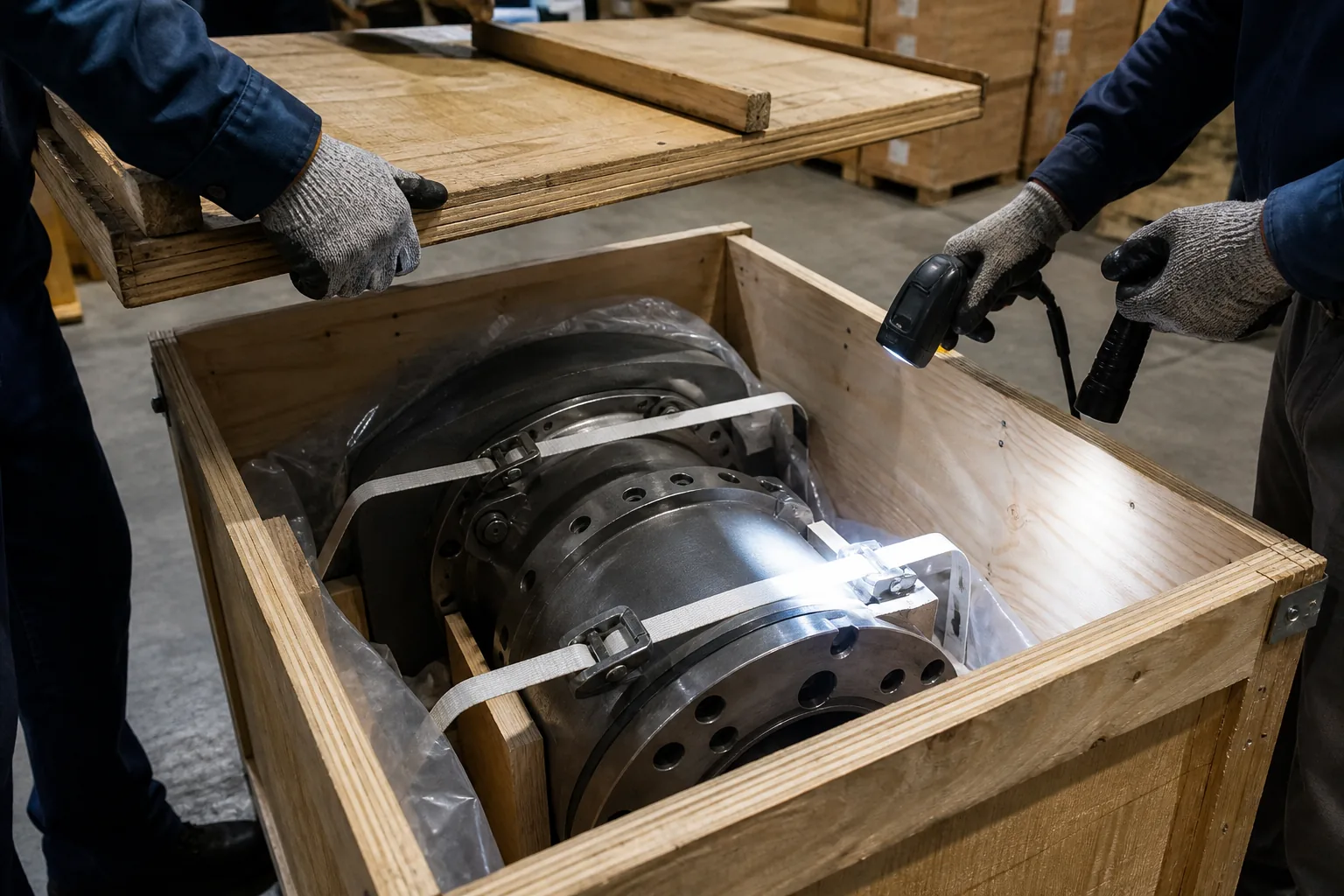
An industrial component in an open transport crate
Checking the goods

Stage 03 · Customs request received

Customs is checking the documents or goods

A request for documents, an examination or a physical inspection does not by itself mean that customs has established a violation. The request may concern declared value, tariff classification, origin, product characteristics or required permits. A response should be based on the records relevant to the request, not memory or individual employees’ recollections.

Start with the document itself. If the customs representative told you about it, ask for the original message and all attachments. Check the receipt date, response deadline, declaration, shipment or period covered by the check, and the exact information requested.

Check first

Place the request alongside the shipment documents

Compare the request with the declaration, contract, invoice, payment and transport records, and product description. Check whether the name, quantity, characteristics, price, payment terms and country of origin are stated consistently.

If an examination or physical inspection has been scheduled, locate the notice and check the date, place and goods covered. Note separately any information the company does not have and request it from the supplier, carrier or customs representative.

Do not rush

A customs question does not mean the company was wrong

Do not state that the price, code or country of origin was wrong merely because customs has asked about it. Check the records first and establish whether there is a basis for that conclusion.

Do not send the entire archive without explanation or repeatedly resend the same files. For each question, make clear which document answers it. If the records differ, identify the reason before sending a new response that could introduce further inconsistencies.

Where the line is

A clear request may be handled internally. A disputed response should be reviewed before filing.

Can be handled internally

When a response may be prepared in-house

The company may be able to respond itself if the request is clear, all necessary documents are available, the information is consistent and the request does not indicate a dispute over value, tariff code, origin or required permits.

Answer each question directly, identify the supporting document and page, and arrange the attachments in the same order. Keep an exact copy of what was submitted and evidence of submission.

Legal review before responding

When a response should be reviewed first

Do not send explanations without review where the request indicates a dispute over the transaction price, tariff code or origin, proposes amending the declaration, or asks for documents the company does not have.

Consider legal review if the request is unclear, covers several shipments or periods, the deadline is close, or earlier responses conflict. Release delays, expert examinations, security, additional payments, offence reports, detention or seizure of goods also merit separate review.

A sealed freight container in a warehouse area
Release interrupted

Stage 04 · Goods not released

First establish why the goods have not been released

'Customs will not release the goods' describes the result, not the cause. The company may be expected to provide a document, amend the declaration, provide security for payments or present the goods for inspection. An expert examination may be underway, or a decision affecting release may already have been issued. These situations cannot be assessed from an oral summary alone.

Ask the customs representative for the messages and documents linked to the declaration and its current status. Find the document or message stating what is required for release to continue, and check its receipt date, content, deadline and the exact action expected. If money is involved, obtain the calculation itself rather than relying on 'you need to pay more'.

Check first

You need the document and the declaration’s current status

Before amending the declaration, paying more, providing security or signing explanations, compare the old and new information. Identify exactly what is proposed to change and which documents support it.

At the same time, record current temporary-storage and transport detention costs, the delivery deadline to the buyer and whether original documents are available. This helps quantify the cost of delay and identify which action needs priority review.

Do not rush

A quick solution may create risk for later shipments

Do not accept a change to value, classification or origin merely to obtain faster release until the basis for customs’ position and the possible effect on other shipments are understood.

While the documents are being reviewed, assign one person to monitor the warehouse, receive new messages, track deadlines, liaise with the customs representative and record costs. Otherwise delay costs may keep rising and the company may learn of a new requirement too late.

Where the line is

A technical issue may be fixed internally. A disputed requirement should be checked first.

Can be handled internally

When a correction may be prepared in-house

The company may act internally where customs has identified a specific, remediable technical defect, the correct information is fully supported by documents, and the correction does not change value, tariff code, origin or required permits.

Before filing, compare the correction once more with the primary documents. Keep evidence of acceptance and check the declaration’s new status. If a new request arrives instead of release, or the calculation changes, reassess the situation.

Legal review before responding

When a decision should be reviewed before action

Seek legal review before paying more, amending the declaration or signing explanations if release has been refused, the amount of security or customs payments is disputed, an expert examination has been ordered, the goods have been detained or seized, or temporary-storage costs are rising without a clear route to release.

Do not delay review if customs asks the company to confirm a disputed change to value, tariff code or origin, the agreed delivery deadline to the buyer is being missed, or release and a possible challenge need to be considered at the same time.

A person arranges documents by date to reconstruct a chronology
Chronology for an appeal

Stage 05 · Decision issued

Preparing a challenge and checking the deadline

You may have a customs decision, inspection report, offence report, refusal of release or refund, or a decision changing the tariff code or customs value. Start with the document itself: check its full title, date, number, issuing authority and the consequences it states.

Keep evidence of when the document was received: a signed receipt, postal notice, online-account message or electronic acknowledgement. The decision date and receipt date are not the same thing. Establish receipt first, then check what procedure applies to that document and the relevant time limit.

Check first

Reconstruct the events by date

Record when the declaration was filed, which requests customs sent, what the company answered and when, whether goods were inspected, which documents and calculations were submitted, when the decision was issued and what happened to the payments afterward. Link each event to a date and supporting record.

Collect the versions of the declaration, contract, invoice, explanations and attachments that were actually submitted to customs. A later corrected version does not show what information customs had when it made the decision.

Do not rush

Do not start an appeal with the general history

Identify the specific customs finding being challenged, how it conflicts with the documents and which records allow that point to be tested. General statements that the result is unfair do not establish that connection.

Do not add information that conflicts with the declaration, contract or earlier explanations without explaining the discrepancy. If new documents or circumstances have appeared, establish when they arose and why they were not submitted earlier. Do not calculate a deadline from memory: support the receipt date with a document or other reliable evidence.

Where the line is

A copy or calculation may be requested internally. An appeal should be prepared from the complete relevant file.

Can be handled internally

What the company can clarify itself

The company can request a copy of a document, ask for clarification of a calculation or seek correction of an obvious clerical error in details, provided this does not require changing its substantive position in the dispute.

Keep evidence of the request and continue monitoring the deadline. Asking for a copy or clarification does not by itself replace the applicable appeal procedure or mean that the deadline has changed.

Legal review before responding

When an appeal merits legal preparation

Seek legal review if the company has received a decision it disputes, needs to assess the route for challenge, faces material financial consequences, goods remain unreleased, an offence report has been drawn up, or the dispute concerns value, tariff classification, origin, restrictions or refunds.

For an initial review, the whole archive is less important than the complete document received, evidence of receipt, the latest customs request, the response to it and the material on which the decision was based. Those records show what additional documents and next steps need consideration.

Other business matters

Not every matter starts with a customs declaration

Some matters arise outside the declaration stage: disputes with public authorities, enforcement of their decisions, international contracts, customs warehousing, sea carriage and situations requiring urgent procedural action.

In those cases the starting point may be a particular document, decision or act of a public authority rather than a shipment. The areas below provide separate entry points for reviewing the issue.

If you already have a customs document

Start with the document and receipt date

For an initial review, provide the complete document, including attachments, and the date it was received. Briefly identify the goods concerned, what changed after receipt and what explanations or documents the company has already sent to customs.

There is no need to send the entire archive at once. An initial review can identify what further material is needed and whether the next task is a company response or consideration of an appeal.